
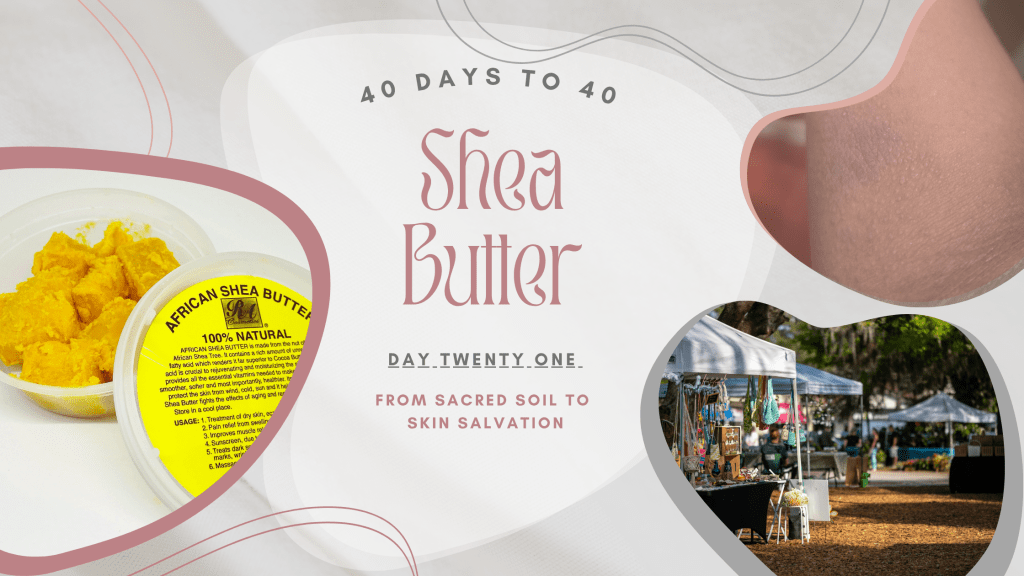
Before it became a staple in moisturizers and curl creams lining store shelves, shea butter was — and still is — sacred. In the heartlands of West Africa, it’s known as “women’s gold,” not only for its creamy richness but also for its cultural and economic power.
Harvested by hand from the nuts of the Vitellaria paradoxa tree, raw shea butter carries centuries of ancestral wisdom. It’s been used to heal wounds, soothe babies’ rashes, protect skin from sun and wind, and prepare women for birth and marriage. Its use is not new — but its global visibility is.
But before I understood the science or the tradition… I met shea butter in a park in Montclair.
A Yellow Brick in the Grass
Every June, the African American parade would pass by our house. I remember the music, the colors, the energy. But one year in high school, I finally got permission to go hang out at the park where the parade ended.
That day, I stopped at a vendor’s table. She was older, radiant, with skin that glowed like it drank the sun. She had this big yellow brick on display and talked passionately about how good it was for the skin — “Raw shea butter,” she called it.
I bought a small plastic container’s worth, curious. It was hard to the touch — almost waxy — but I noticed how quickly it melted with pressure and heat. I took it home and started using it on the patches of eczema that never seemed to go away.
No fragrance. No gimmicks. Just pure, natural healing.
That was my first true encounter — not through science or family tradition — but through culture, connection, and curiosity.
Why Shea Butter Works: The Science of Soothing
Shea butter isn’t just moisturizing. It’s nourishing — and for eczema-prone skin like mine, that difference is everything.
💧 Occlusive + Emollient:
Shea butter creates a breathable barrier while filling the gaps in dry, damaged skin — perfect for keeping moisture in and irritants out.
🧬 Rich in Essential Fatty Acids:
Its blend of oleic and stearic acids restores skin flexibility and softness.
🧪 Natural Anti-Inflammatories:
Shea’s cinnamic acid esters help calm irritation, reduce redness, and ease flare-ups without the sting of synthetic creams.
🧴 Loaded with Vitamins A & E:
These skin-healing antioxidants support regeneration — important for anyone managing chronic skin conditions.
From Home Remedies to Hero Ingredient
Now, decades later — both as a cosmetic chemist and a conscious consumer — I still reach for shea. Even after years working with emulsifiers, preservatives, and active complexes, it’s this humble butter that continues to impress me.
Whether used raw or refined, solo or as part of a balanced formula, shea butter doesn’t just sit on the skin — it supports it. Especially for melanin-rich skin or those battling eczema, its ability to nourish, restore, and protect is unmatched.
From a vendor in the park to lab benches and branding decks, my relationship with shea butter has evolved — but never lost its roots.
It’s proof that sometimes healing doesn’t come in a fancy tube. It comes in bricks. In stories. In traditions passed down through hands and hearts.
In a world that often makes us feel like we need more, maybe what we really need is to return to the simple and sacred.
 devXpressions
Leave a comment