
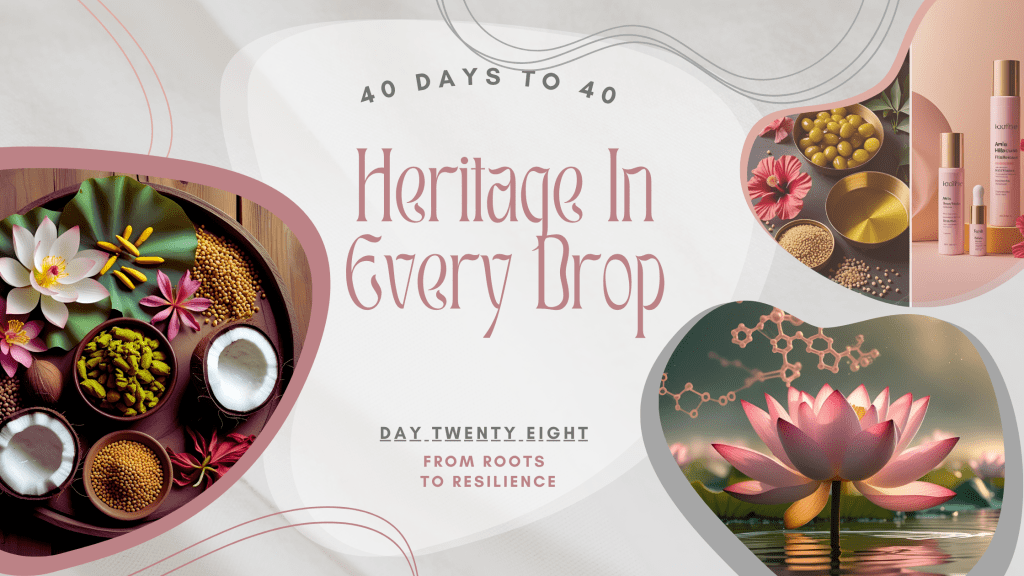
In my last post, I opened up about my own hair loss journey and how it connects to a bigger, quieter struggle in the South Asian and Indo-Caribbean community.
Today, I want to go deeper—not into formulas or products (those seeds are still growing 🌱)—but into the heritage ingredients that have shaped our beauty traditions for generations.
The Ingredients Our Elders Trusted
Growing up, beauty wasn’t found in a store. It was in the kitchen, the garden, and the spice drawer.
Hair and skin rituals were part of life, not luxury.
- Amla (Indian Gooseberry): Dried, powdered, or steeped in oil to strengthen hair and add shine.
- Hibiscus flowers: Blended into hair masks to condition and stimulate growth.
- Fenugreek seeds: Soaked overnight, ground into a paste, and applied for scalp health and thickness.
- Coconut & mustard oils: Massaged into the scalp and hair to nourish from root to tip.
- Yogurt & turmeric masks: Used to soothe skin, brighten complexion, and treat blemishes.
- Henna: Applied to condition hair, strengthen strands, and add natural color.
These weren’t occasional spa days—they were weekly rituals. The process wasn’t just about beauty; it was about connection—to the land, to our families, and to ourselves.
Today, we see a modern revival of these same traditions:
- Ammu Beauty – Infuses Ayurvedic wisdom into face treatments.
- Ranavat – A luxury Ayurvedic skincare line using saffron, jasmine, and turmeric.
- Live Tinted – Celebrating heritage pigments like turmeric in beauty products.
- Turmeric exfoliation pads – A modern nod to ancient ubtan scrubs, now packaged for ease.
It’s proof that while formulation technology evolves, the roots of beauty often remain the same.
The Lotus: My Personal and Professional Totem
The lotus has always been more than a plant for me—it’s a symbol that has marked my life’s milestones.
From my first tattoo to the mornings when I would wake up images of lotus flowers on my altar, thanking God for another day—the lotus has always been a reminder of resilience.
In Spiritual and Hindu homes, the lotus symbolizes:
- Purity – Rising unstained from muddy waters
- Resilience – Thriving in challenging conditions
- Transformation – Unfolding layer by layer, just like personal growth
As a chemist, I’m fascinated by how tradition and science overlap—and how they sometimes leave untapped opportunities hidden in plain sight.
Science Meets Tradition
In the beauty industry, lotus is often recognized for:
- Petal extracts – Used in luxury skincare for antioxidant and soothing properties (Fresh Beauty’s Lotus Youth Preserve Cream is one example).
- Root extracts – Valued for hydration and texture (Tatcha’s The Dewy Skin Cream features lotus root).
But there’s a part of the plant that I believe deserves more exploration:
- The lotus seed—nutrient-rich, resilient, and quietly powerful
In many cultures, seeds symbolize potential. In science, they’re a starting point for discovery.
That’s all I’ll say for now. 😉
Why Heritage Still Matters in Modern Formulation
In an era of fast beauty, there’s something powerful about looking back.
Heritage ingredients like the lotus remind us that solutions for hair and skin don’t always have to be synthetic—they can be rooted in tradition, elevated by science.
For me, this journey is about bridging the old and the new—bringing cultural authenticity into innovation in a way that respects our roots.
And just like the lotus rises from muddy water, this path has grown from personal challenges into a purpose that feels both deeply personal and widely shared.
 devXpressions
Leave a comment